

I had ordered this for my husband because he loves the poem Invictus. He loved it!


The Poetry Bookmark Collection
Brass bookmarks inspired by words that guide, comfort, and endure.
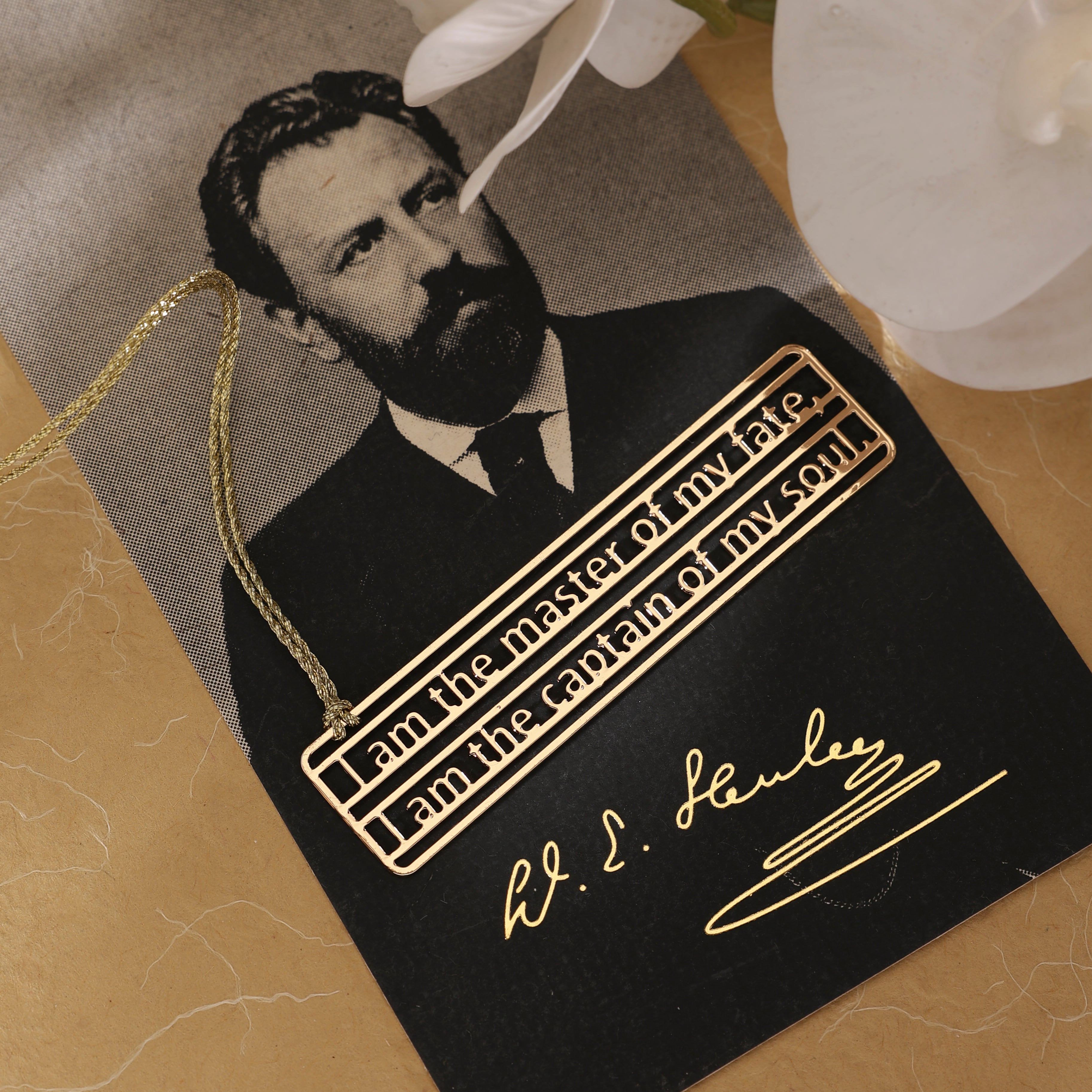
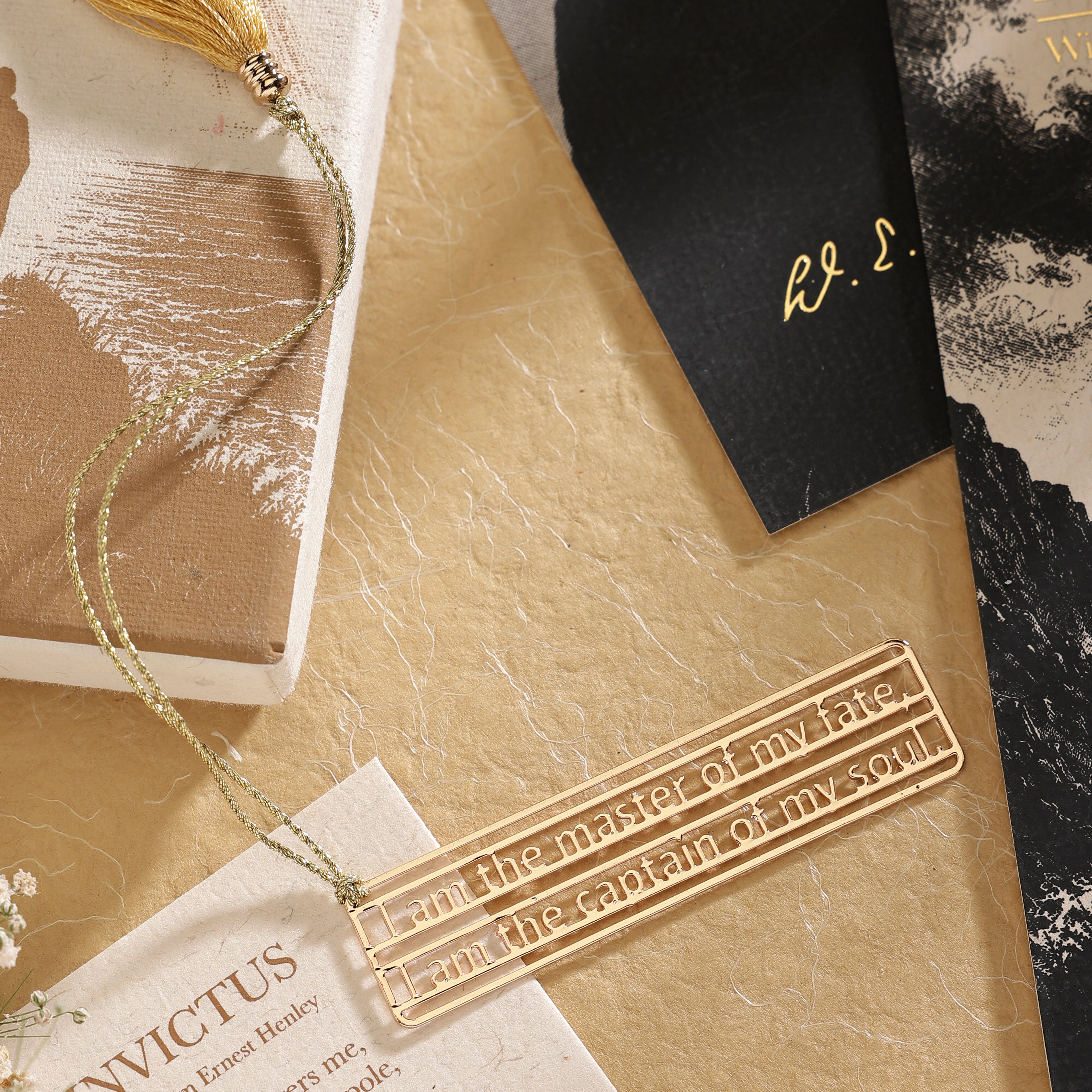
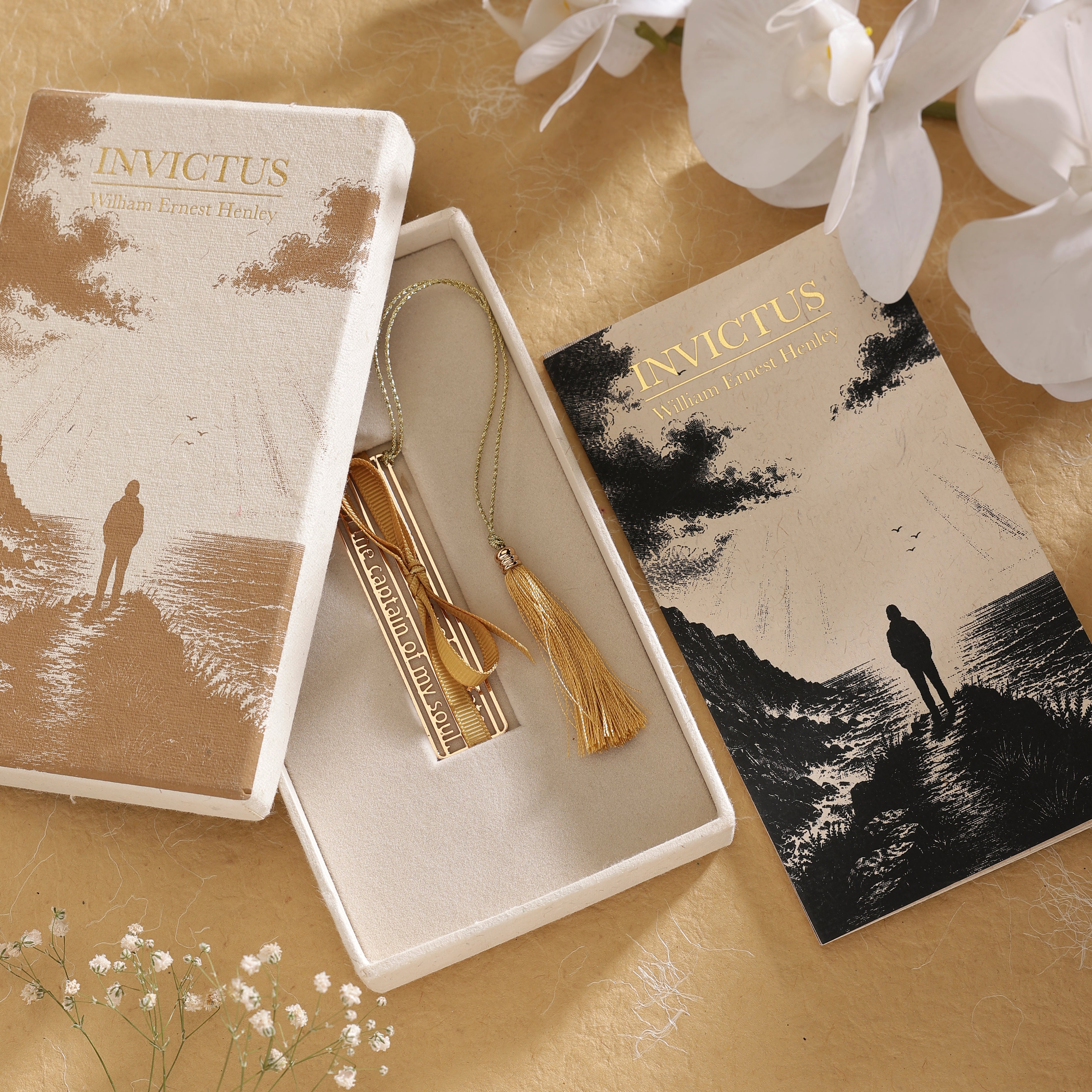
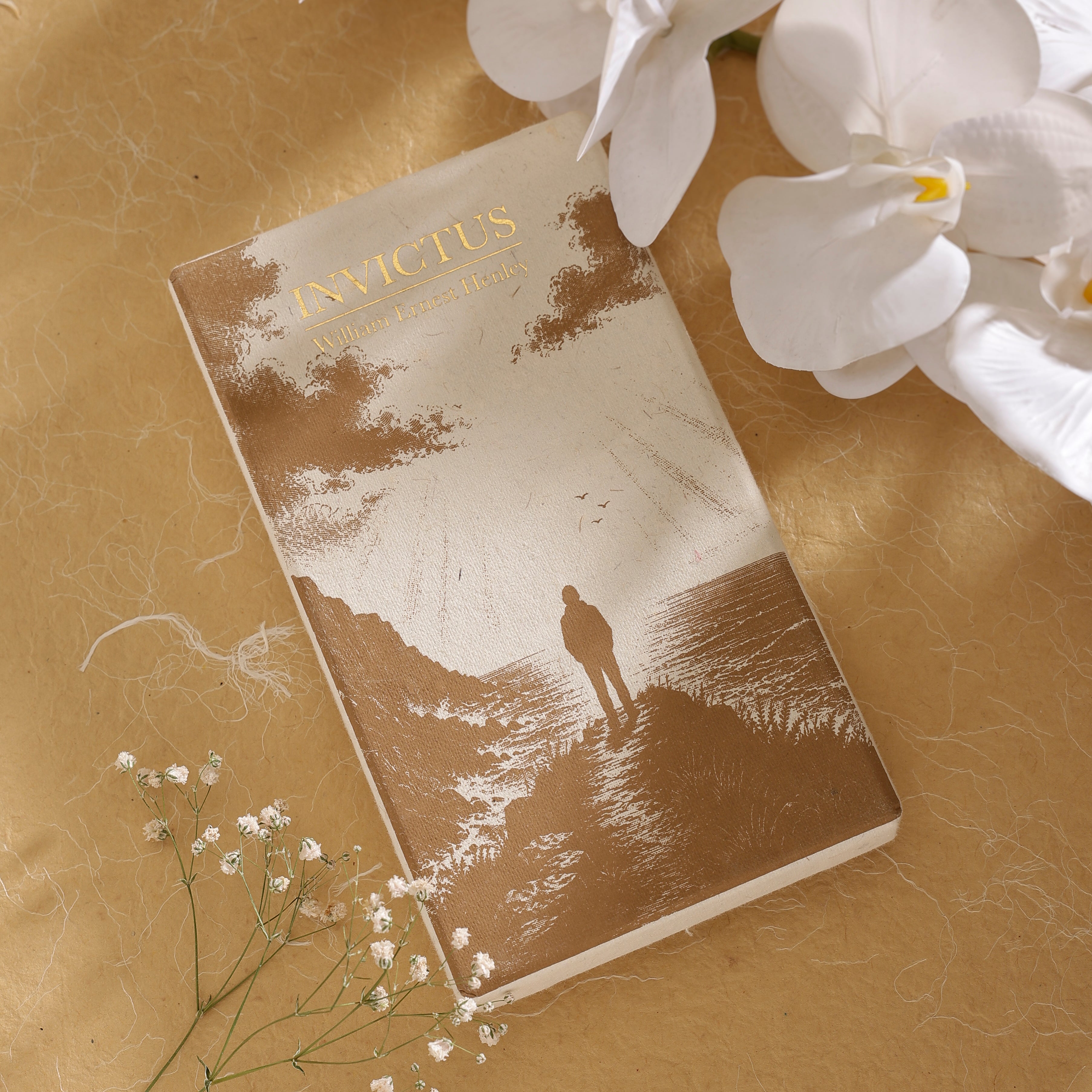
Inspired by William Ernest Henley’s enduring poem Invictus, this brass bookmark carries the powerful closing lines, “I am the master of my fate, I am the captain of my soul.” Written from a place of personal struggle and inner resolve, the poem remains a timeless reminder of courage, dignity and self-belief.
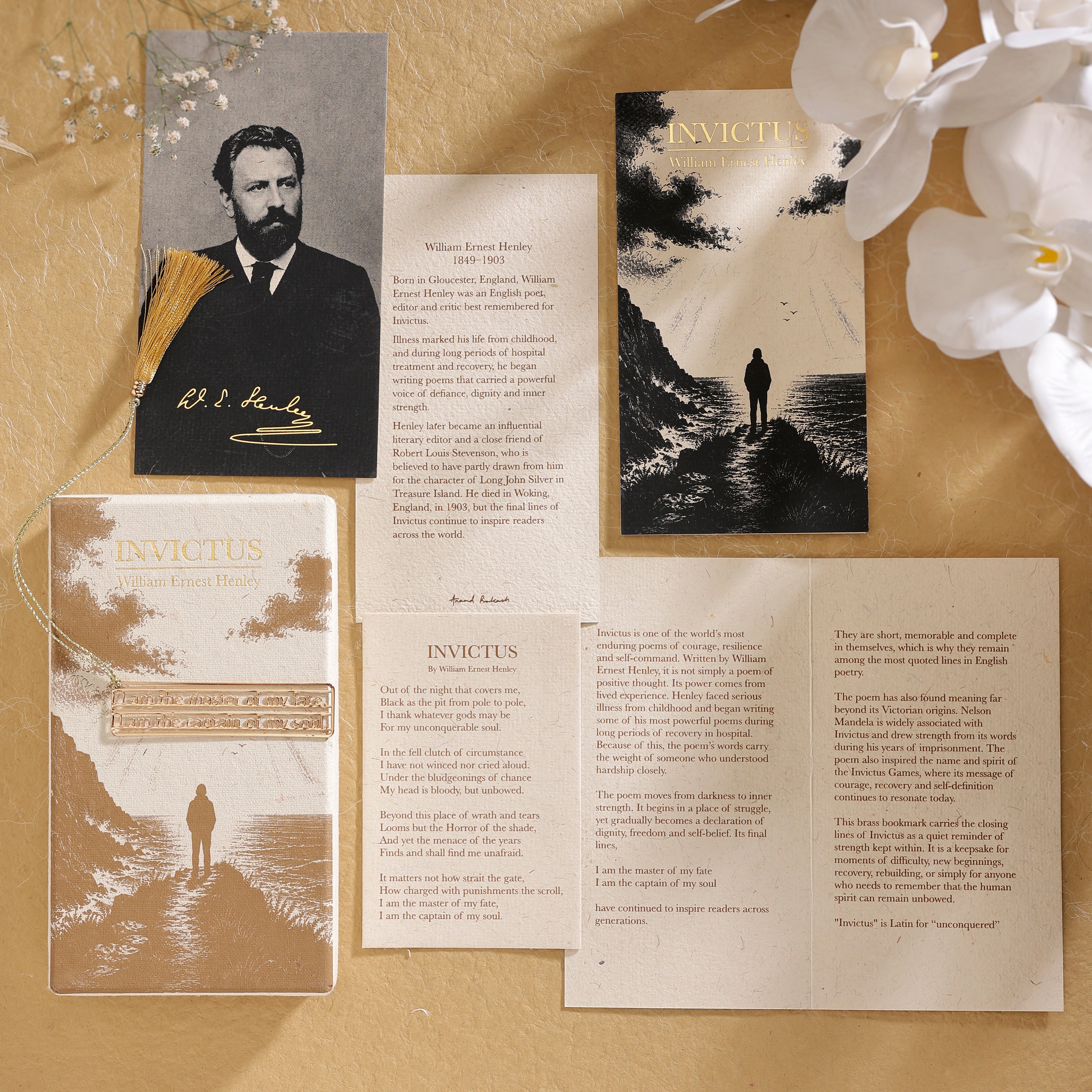
Presented in a recycled paper gift box, the bookmark comes with a matching booklet featuring the full poem, a note on William Ernest Henley and his life, and a short reflection on why these words continue to inspire readers across generations.
INVICTUS - By William Ernest Henley
Out of the night that covers me,
Black as the pit from pole to pole,
I thank whatever gods may be
For my unconquerable soul.
In the fell clutch of circumstance
I have not winced nor cried aloud.
Under the bludgeonings of chance
My head is bloody, but unbowed.
Beyond this place of wrath and tears
Looms but the Horror of the shade,
And yet the menace of the years
Finds and shall find me unafraid.
It matters not how strait the gate,
How charged with punishments the scroll,
I am the master of my fate,
I am the captain of my soul.
About the Poem:
Invictus is one of the world’s most enduring poems of courage, resilience and self-command. Written by William Ernest Henley, it is not simply a poem of positive thought. Its power comes from lived experience. Henley faced serious illness from childhood and began writing some of his most powerful poems during long periods of recovery in hospital. Because of this, the poem’s words carry the weight of someone who understood hardship closely.
The poem moves from darkness to inner strength. It begins in a place of struggle, yet gradually becomes a declaration of dignity, freedom and self-belief. Its final lines,
I am the master of my fate
I am the captain of my soul
have continued to inspire readers across generations.
They are short, memorable and complete in themselves, which is why they remain among the most quoted lines in English poetry.
The poem has also found meaning far beyond its Victorian origins. Nelson Mandela is widely associated with Invictus and drew strength from its words during his years of imprisonment. The poem also inspired the name and spirit of the Invictus Games, where its message of courage, recovery and self-definition continues to resonate today.
This brass bookmark carries the closing lines of Invictus as a quiet reminder of strength kept within. It is a keepsake for moments of difficulty, new beginnings, recovery, rebuilding, or simply for anyone who needs to remember that the human spirit can remain unbowed.
"Invictus" is Latin for “unconquered”
About the poet:
William Ernest Henley(1849–1903)
Born in Gloucester, England, William Ernest Henley was an English poet, editor and critic best remembered for Invictus.
Illness marked his life from childhood, and during long periods of hospital treatment and recovery, he began writing poems that carried a powerful voice of defiance, dignity and inner strength.
Henley later became an influential literary editor and a close friend of Robert Louis Stevenson, who is believed to have drawn partly on him for the character of Long John Silver in Treasure Island. He died in Woking, England, in 1903, but the final lines of Invictus continue to inspire readers across the world.
Overall rating: 5.0 / 5 from 2 reviews.
I had ordered this for my husband because he loves the poem Invictus. He loved it!
This item was presented to one of the Great Lyricist Shri Gulzar Sab on his 94 th Birthday. He liked it immensely. It is very good product like your other items. Keep it up. All the best. Ashok Bindal