
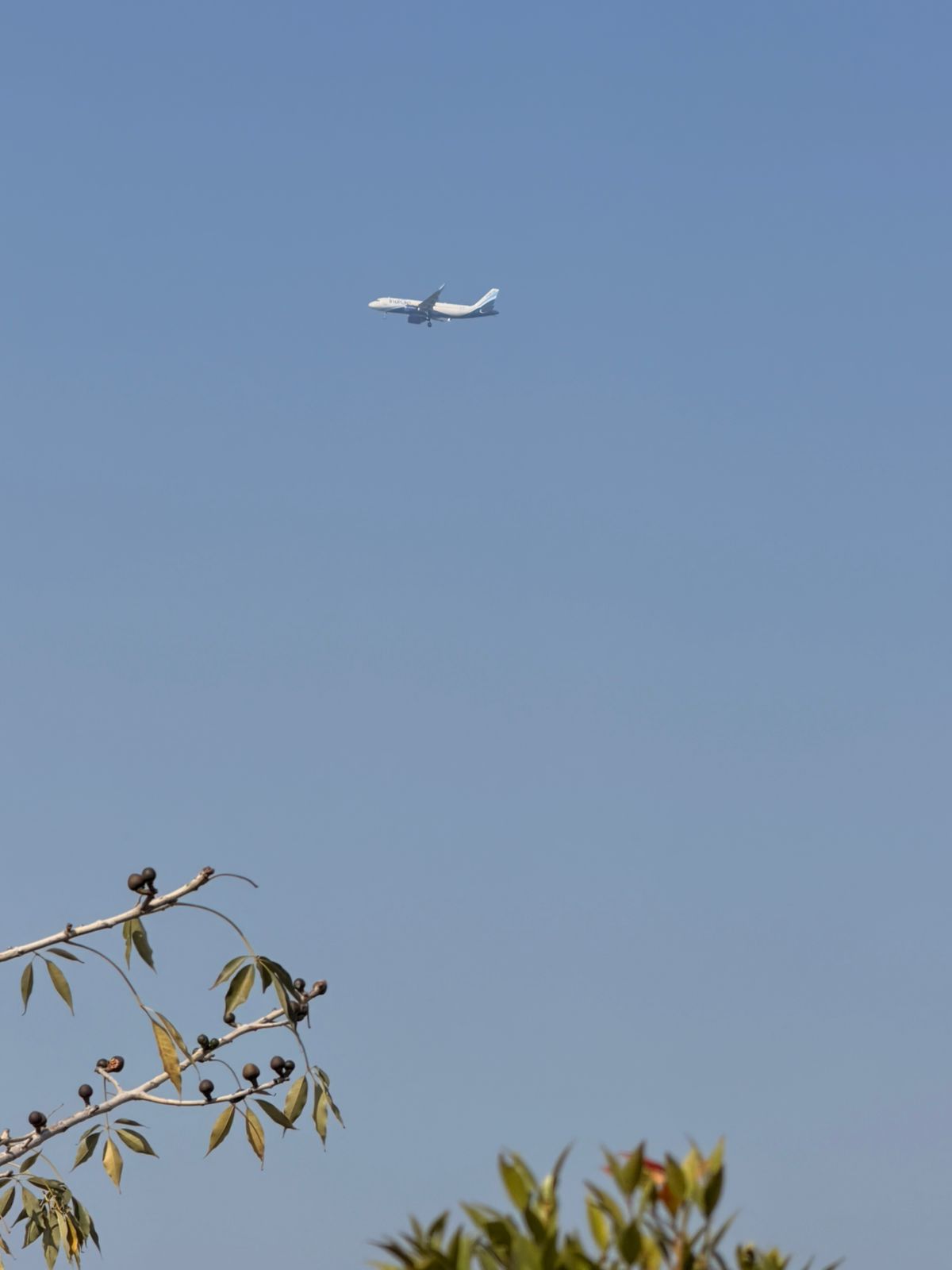
Every two minutes, one crosses by. A silver line in the sky — and something inside me still pauses, the way it did years ago...
My first flight was in 1994, Delhi to Kathmandu. A friend couldn’t fly for some reason and passed the ticket to me. I was in high school then. Flying, for someone like me, was almost unthinkable, one of those things you admired from a distance, like a window you weren’t meant to open yet.
Watching from the outside
Later, when I came to Delhi for college, travelling by aeroplane was still out of the question. I was surviving on a minuscule budget. The closest I could get to an airport was when we went to drop off or pick up a friend, usually someone leaving to study abroad, the kind of “trophy qualification” we all secretly envied.
I remember standing outside departures, after we had said goodbye, and asking myself quietly: When will I fly?
Those visits weren’t glamorous. But they felt special, like borrowing the atmosphere of a world that promised movement, possibility, and a wider life.
Paperworld Frankfurt, and the first taste of “work takes you places”
Then came an opportunity to fly to Frankfurt for Paperworld. What happened there is a story for another time — but that trip marked a shift.
Travel wasn’t just a desire anymore. It began to have purpose.
Soon after, I got to visit the UK on a grant from the British Council for coming runner-up in the Young Design Entrepreneur Award. That, too, felt like a door opening, a reminder that when you keep showing up, the world slowly begins to widen around you.
Mumbai Airport: months that changed everything
The real turning point came when I got the opportunity to open our stores at the Mumbai airport. I spent months at the airport, setting up my own store. Wi-Fi was (thankfully) free. Food and coffee were available at staff prices.
It wasn’t glamorous either, but it was deeply alive. An airport has its own rhythm: precise, relentless, and strangely comforting once you surrender to it.
And during that period, I had an overdose of aeroplanes and everything related to them. I saw how things really work: the lives of crew, the choreography behind every movement, the quiet discipline of systems. At times, I even had special permission to go to another terminal via the airside, travelling in a vehicle alongside the runways, the kind of moment you don’t forget because it feels like you’ve stepped into the inner workings of a living machine.

The people who kept coming back
Over time, we built a dedicated customer base among crew, pilots, and air traffic controllers, people who shopped regularly from our stores.
This is one reason I’ve always kept an aeronautical range, adding newer designs over the years. The most recent was a range inspired by runway markings — those lines and codes most people ignore, but which hold order, meaning, and a certain beauty when you look closely.

Miles, movement, and the cost of it
During the setup period, I was travelling constantly between Mumbai and Delhi, clocking thousands of miles.
At one point, I genuinely felt ill from all the travelling — not from the flying itself, but from the repetition of packing, waiting, moving, arriving, and doing it all again.
Quiet flights — and the occasional conversation
On flights, I rarely talk to co-passengers. I’m usually reading or listening to podcasts, happy in my own little cabin of thought.
But every now and then, someone sits next to you who is unusually talkative — and a few of those conversations have turned into friendships and long, unexpected acquaintances.
Maybe that’s another reason aeroplanes continue to fascinate me:
They are machines of movement, yes — but they also carry human stories in close proximity, for a brief stretch of time, before everyone disappears into their own lives again.
